
A recorded instrument
A deed, mortgage, lien release or plat, filed with the county, carrying a book and page number and a recording date. It stays readable and checkable whether or not the project that pointed at it still exists.
Real estate token research
Tokenized real estate products publish a net asset value and ask the market to price on it. Plat Index measures how much of that figure can be traced to something filed in a public land record: a recorded deed, a plat approved and put on file with a county recorder, a parcel identifier that resolves to a named titleholder. Whatever cannot be traced that far is reported as what it is, an unevidenced balance, rather than folded quietly into a total.
A recorded instrument either exists or it does not. That is the line the index draws.
Verification happens one parcel at a time, in the jurisdiction where the land actually sits.
The output is a single backing ratio and the dollar gap behind it, stated plainly.
Primer
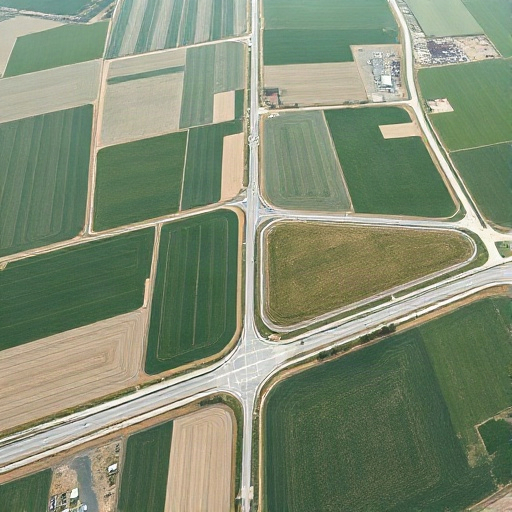
A plat is a surveyed map of land, drawn to scale by a licensed surveyor, showing how a tract has been divided. It marks the boundary of each lot with bearings and distances, names the streets and alleys, sets out the easements a utility or a neighbor is entitled to use, and identifies the physical monuments driven into the ground at the corners so the lines can be found again decades later. It carries the surveyor's seal and certificate, the owner's dedication of any public land, and the signatures of whichever local body had to approve the division.
The important part happens after the drawing is finished. The plat is submitted to the county recorder or register of deeds and, once approved, it is recorded. From that moment the map is a public document with a book and page number, and every lot on it has a short legal name of its own. A deed no longer has to recite hundreds of feet of metes and bounds to describe a property. It can simply say Lot 7, Block 3, Fairview Addition, and point at the recorded plat for the rest.
That mechanism is why the land record works. The value of a property is arguable and moves with the market, but the question of whether a specific piece of ground exists, how it is bounded and who holds title to it is answered by a filing that a stranger can pull, read and check. A plat of subdivision splits one tract into many. A plat of consolidation joins several into one. A plat of vacation gives a recorded street or easement back. Each is an amendment to the same public ledger of who owns which ground.
Plat Index takes its name from that filing because it works the same way. A token's claimed value is arguable. Whether a parcel was recorded, and to whom, is not.
The problem
Net asset value is an old and well understood idea. Add up what a vehicle owns, subtract what it owes, divide by the units outstanding. Funds have reported it for a century, and the number means something because the assets behind it are held by a custodian, priced against a stated source and reviewed by someone who does not work for the manager.
A tokenized real estate product borrows the format without always borrowing the plumbing. The NAV appears as a headline figure on a dashboard, updated on a schedule, and the chain that would let a reader test it is frequently missing. The properties are described as a portfolio rather than named. The appraisal is cited without a date, an address or the appraiser who signed it. An operating entity is disclosed, but nothing shows that this entity is the titleholder of record for anything at all.
The gap matters because the two halves of the claim fail differently. A valuation is an opinion formed on a particular day using particular comparables, and it can be wrong by a wide margin while everyone involved acts in good faith. A recorded interest is not an opinion. Either a deed conveying that parcel to that entity sits in the county's books or it does not. When a project publishes a value but never lets the reader reach the second question, the softest part of the claim is the part being priced.
There is a second link that is easy to skip past. A token holder almost never owns land. The holder owns an interest in an entity, and the entity is supposed to own the land. Verification therefore has to run in both directions: outward from the disclosed entity to a recorded parcel, and back from the entity to whatever the token is actually a claim on. A project can be completely honest about the first leg and silent about the second, and the published NAV will look identical either way.
None of this makes an unverified figure a false one. Plenty of real property is held by projects that simply have not published their filings, and plenty of counties keep records that are awkward to reach from a browser. The honest statement is narrower and more useful: a portion of the claimed value has been traced to a record, a portion has not, and a reader deserves to see which is which before deciding what the number is worth.
A deed, mortgage, lien release or plat, filed with the county, carrying a book and page number and a recording date. It stays readable and checkable whether or not the project that pointed at it still exists.
An estimated portfolio value, an internal mark, an appraisal with no address attached. It may be accurate to the dollar, but it can only be read as accurate for as long as someone keeps publishing it.
The instrument
Enter the net asset value a project claims, then enter the portion you can trace to a record under the standard in the methodology below. The ratio is the share of the claim that stands on evidence. The gap is the part that does not, stated in dollars rather than adjectives.
The ratio is evidenced backing divided by claimed NAV. Nothing here is fetched from a project, scaled or smoothed. It is arithmetic on the two figures you supply.
| Ratio | Reported as | What it means |
|---|---|---|
| 100% and above | Fully evidenced | Every dollar of the claim, and sometimes more, resolves to a recorded interest. |
| 75% to 99.9% | Substantially evidenced | The bulk of the claim is traceable. The remainder is worth a question, not an alarm. |
| 40% to 74.9% | Partially evidenced | Real property is on file, and a large share of the headline rests on the publisher alone. |
| Below 40% | Largely unevidenced | Most of the number cannot be walked back to a filing, which makes it unchecked rather than untrue. |
Methodology
Evidence is graded by how little it depends on the party making the claim. Only the top tier is counted in full. The rest is disclosed and set aside, which is the difference between a conservative figure and a flattering one.
| Tier | Evidence | Treatment |
|---|---|---|
| A | Recorded instrument. A deed or equivalent filed with the county, tied to a parcel identifier and a legal description, naming a titleholder that matches the project's disclosed entity. | Counted in full |
| B | Public assessment record. A named address or parcel with an assessor's record available to anyone, where the recorded chain of title has not yet been pulled or the titleholder does not match cleanly. | Counted at the assessed figure, flagged |
| C | Third party appraisal. A valuation naming a specific address, a date and the appraiser responsible for it, with no recorded interest yet confirmed behind it. | Disclosed, not counted |
| D | Self reported total. A portfolio value, an internal mark or an unattributed estimate with no property named anywhere in the disclosure. | Excluded |
Before a real estate token's NAV is worth anything as information, someone has to be able to point at the ground behind it. Run the ratio, read the tiers, then ask the project for the book and page.